
Hua Tuo: The Physician Who Anticipated Modern Medicine
Hua Tuo is revered by later generations as the “Divine Physician” not only because of his exceptional medical skills, but also because of his profound influence on multiple fields of medicine, including anesthesia, surgery, health preservation, clinical diagnosis, and acupuncture.
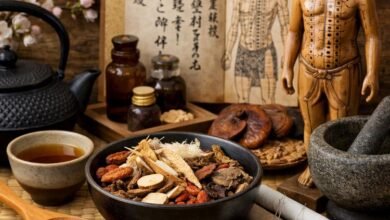
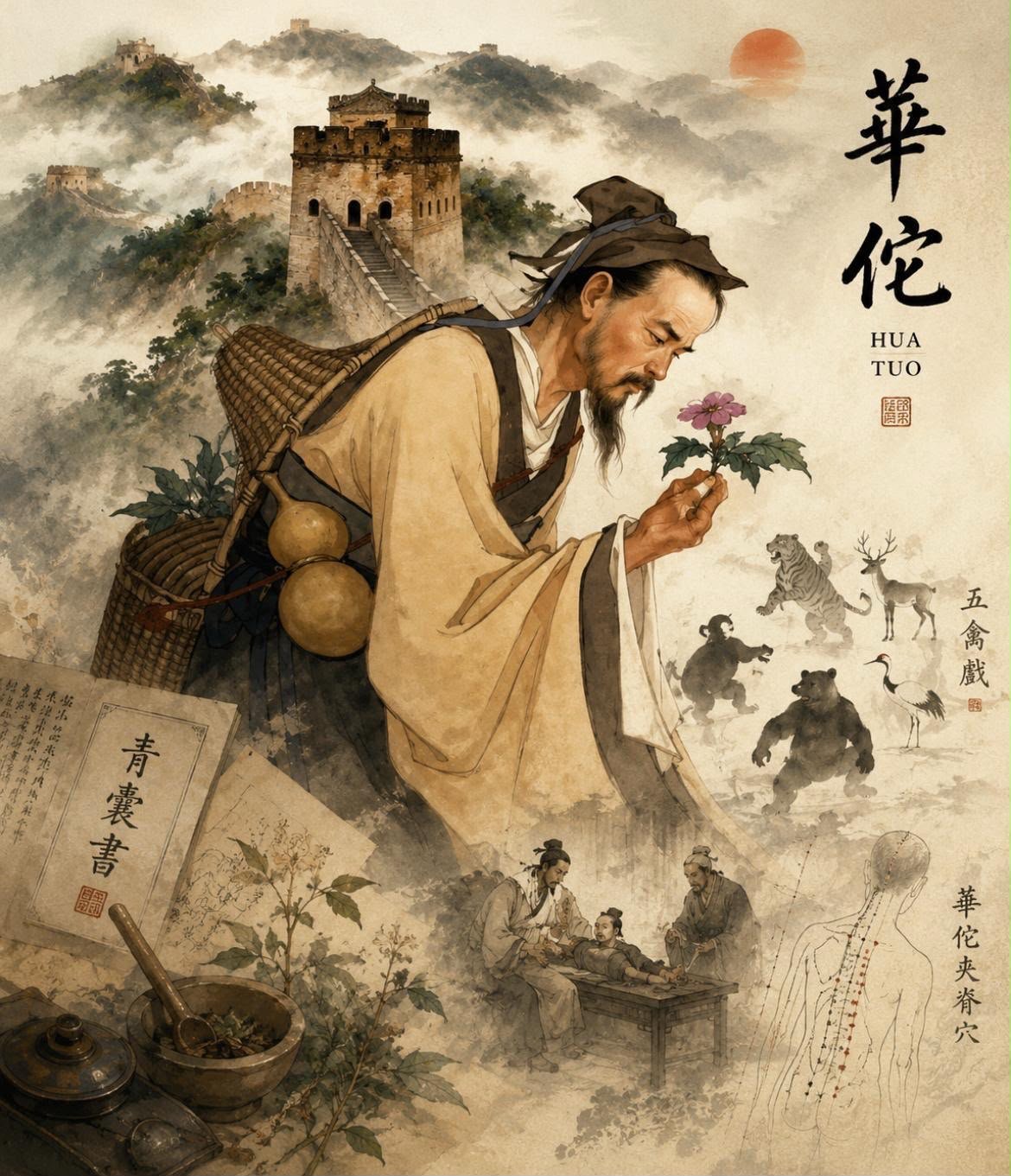
One of Hua Tuo’s most remarkable achievements in medical history was his pioneering use of anesthesia. He developed the famous preparation known as “Mafeisan” (Anesthetic Boiling Powder). According to the historical records of the Records of the Three Kingdoms and the Book of the Later Han, he combined medicinal substances with wine to induce a state resembling general anesthesia, allowing patients to undergo relatively complex surgical procedures. This innovation preceded the formal use of ether anesthesia in modern Western medicine by approximately 1,700 years. Although the exact formula of Mafeisan has been lost, Hua Tuo is still regarded by many medical historians as one of the earliest physicians in the world to use general anesthesia for surgical operations.
In addition to his contributions to anesthesia, Hua Tuo achieved extraordinary success in the field of surgery. He was not only highly skilled in internal medicine but also exceptionally proficient in surgical treatment. Historical records describe him performing abdominal operations, treating gastrointestinal disorders, draining abscesses through surgical incision, and managing various traumatic injuries. Considering the limited medical conditions of his time, these procedures represented an extraordinary level of medical advancement. For this reason, Hua Tuo is often regarded as one of the founding figures of Chinese surgery.
Hua Tuo was concerned not only with treating disease but also with preserving health and preventing illness. He believed that “the human body should engage in regular movement, but should not be pushed to exhaustion.” Guided by this principle, he created the famous Five-Animal Exercises, a health cultivation system based on the movements of the tiger, deer, bear, monkey, and bird. The Five-Animal Exercises are considered one of the earliest systematically documented therapeutic exercise methods in Chinese history and continue to be practiced widely throughout China and many other parts of the world today.
In clinical practice, Hua Tuo emphasized individualized treatment and opposed the rigid application of fixed prescriptions. He carefully observed each patient’s complexion, pulse, voice, and mental condition in order to understand the nature of the illness and formulate a treatment plan tailored to the individual. This approach, which adapts treatment according to both the patient and the disease, closely reflects the principles of pattern differentiation that later became a cornerstone of Traditional Chinese Medicine. His clinical philosophy exerted a lasting influence on the development of Chinese medical practice.
Hua Tuo was also highly respected for his expertise in acupuncture. The well-known Huatuo Jiaji points, a group of important acupuncture points located along both sides of the spine, have long been associated with his name and remain widely used in clinical practice today. Although scholars continue to debate whether these points were entirely created by Hua Tuo himself, there is no doubt that he made significant contributions to the development and transmission of acupuncture medicine.
Taken together, Hua Tuo was not merely an outstanding physician but also an innovative medical pioneer. His achievements in anesthesia, surgery, health cultivation, clinical diagnosis, and acupuncture left a lasting legacy that has influenced both Chinese medicine and the broader history of world medicine. For this reason, he has been honored for nearly two thousand years as the “Divine Physician” and remains one of the most iconic figures in the history of Traditional Chinese Medicine.
Bibliographic References
Fan Ye (398–445 CE)
Book of the Later Han (Hou Han Shu).
Fan Ye. Hou Han Shu (Book of the Later Han). Beijing: Zhonghua Book Company.
A fundamental historical work of the Eastern Han period, containing the principal biography of Hua Tuo as well as valuable information on the medical practices of his time.
Chen Shou (233–297 CE)
Records of the Three Kingdoms (Sanguozhi).
Chen Shou. Sanguozhi (Records of the Three Kingdoms). Beijing: Zhonghua Book Company.
One of the most authoritative historical sources on the Three Kingdoms period, documenting significant episodes in Hua Tuo’s life, including his relationship with Cao Cao.
The historical information concerning Hua Tuo presented in this article is derived primarily from these two classical works of Chinese historiography.
************
I più importanti contributi di Hua Tuo
Hua Tuo è venerato dalle generazioni successive come il “Medico Divino” non solo per le sue eccezionali capacità cliniche, ma anche per la profonda influenza che ha esercitato in numerosi ambiti della medicina, tra cui l’anestesia, la chirurgia, la prevenzione e la promozione della salute, la diagnosi clinica e l’agopuntura.
Uno dei risultati più straordinari di Hua Tuo nella storia della medicina fu il suo ruolo pionieristico nell’utilizzo dell’anestesia. Egli sviluppò il celebre preparato noto come Mafeisan (Polvere Anestetica). Secondo quanto riportato nelle cronache storiche del Cronache dei Tre Regni e del Libro degli Han Posteriori, combinava sostanze medicinali con il vino per indurre nei pazienti uno stato simile all’anestesia generale, consentendo l’esecuzione di interventi chirurgici relativamente complessi. Questa innovazione precedette di circa 1.700 anni l’introduzione ufficiale dell’anestesia con etere nella medicina occidentale moderna. Sebbene la formula esatta del Mafeisan sia andata perduta, Hua Tuo è tuttora considerato da molti storici della medicina uno dei primi medici al mondo ad aver utilizzato una forma di anestesia generale durante gli interventi chirurgici.
Oltre ai suoi contributi nel campo dell’anestesia, Hua Tuo ottenne risultati straordinari anche nella chirurgia. Non era soltanto un medico esperto di medicina interna, ma possedeva anche notevoli competenze chirurgiche. Le fonti storiche descrivono interventi addominali, trattamenti di patologie gastrointestinali, incisione e drenaggio di ascessi e la cura di numerosi tipi di traumi e ferite. Considerando le limitate condizioni mediche dell’epoca, tali procedure rappresentavano un livello di avanzamento scientifico eccezionale. Per questo motivo, Hua Tuo viene spesso considerato uno dei fondatori della chirurgia cinese.
Hua Tuo non si occupava soltanto della cura delle malattie, ma attribuiva grande importanza anche alla conservazione della salute e alla prevenzione. Egli sosteneva che «il corpo umano deve essere mantenuto in movimento, ma senza essere portato all’eccesso». Guidato da questo principio, elaborò il celebre Wuqinxi (Gioco dei Cinque Animali), un sistema di esercizi basato sull’imitazione dei movimenti della tigre, del cervo, dell’orso, della scimmia e dell’uccello. Il Wuqinxi è considerato uno dei più antichi metodi terapeutici e ginnici documentati in modo sistematico nella storia cinese e continua ancora oggi a essere praticato in Cina e in molte altre parti del mondo.
Nella pratica clinica, Hua Tuo enfatizzava l’importanza di un trattamento personalizzato e si opponeva all’applicazione rigida di formule terapeutiche standardizzate. Osservava attentamente il colorito del viso, il polso, la voce e lo stato mentale del paziente per comprendere la natura della malattia e definire una terapia adeguata alle caratteristiche individuali. Questo approccio, che adatta il trattamento sia alla persona sia alla patologia, riflette da vicino i principi della differenziazione diagnostica che in seguito sarebbero diventati uno dei fondamenti della Medicina Tradizionale Cinese. La sua filosofia clinica ha esercitato un’influenza duratura sullo sviluppo della medicina cinese.
Hua Tuo godeva inoltre di grande prestigio per la sua competenza nell’agopuntura. I celebri Punti Jiaji di Hua Tuo, un gruppo di importanti punti situati ai lati della colonna vertebrale, sono da secoli associati al suo nome e continuano a essere ampiamente utilizzati nella pratica clinica. Sebbene gli studiosi discutano ancora se questi punti siano stati effettivamente creati da Hua Tuo, non vi è dubbio che egli abbia dato un contributo significativo allo sviluppo e alla diffusione dell’agopuntura.
Nel loro insieme, le opere e le innovazioni di Hua Tuo mostrano come egli non fosse soltanto un medico straordinario, ma anche un autentico pioniere della medicina. I suoi contributi all’anestesia, alla chirurgia, alla prevenzione, alla diagnosi clinica e all’agopuntura hanno lasciato un’eredità duratura che ha influenzato profondamente sia la medicina cinese sia la storia della medicina mondiale. Per questo motivo, da quasi duemila anni viene onorato come il “Medico Divino” e continua a essere considerato una delle figure più rappresentative e influenti della Medicina Tradizionale Cinese.
Riferimenti Bibliografici
Fan Ye (398–445 d.C.)
Book of the Later Han (Hou Han Shu).
Fan Ye. Hou Han Shu (Book of the Later Han). Beijing: Zhonghua Book Company.
Opera storica fondamentale della dinastia Han Orientale, contenente la principale biografia di Hua Tuo e numerose informazioni sulla pratica medica del suo tempo.
Chen Shou (233–297 d.C.)
Records of the Three Kingdoms (Sanguozhi).
Chen Shou. Sanguozhi (Records of the Three Kingdoms). Beijing: Zhonghua Book Company.
Una delle più autorevoli fonti storiche sul periodo dei Tre Regni, che documenta episodi significativi della vita di Hua Tuo, inclusi i suoi rapporti con Cao Cao.
_ GiadaZhao