
Law Before Power
by Gianni Lattanzio
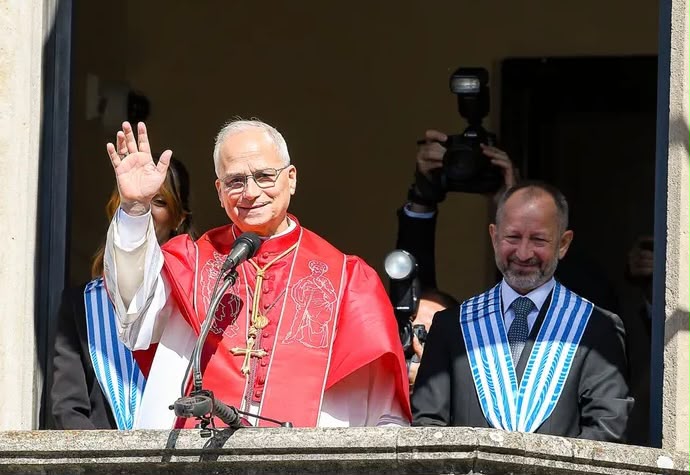
Pope Leo XIV’s visit to San Marino and Rimini carried a geopolitical significance that far exceeded the scale of its itinerary. From one of Europe’s smallest republics, he addressed the most consequential disorder of our age: a world in which war is again treated as a tool of policy, international law as a selective vocabulary, and technological power as a new frontier of domination.
San Marino offered the Pope a compelling symbolic stage. Its endurance as an ancient republic suggests that political dignity is not measured in territory, military reach, or economic weight, but in a state’s capacity to place law above force and persons above interests. In this sense, the Pope’s call for “good politics” was not devotional language. It was a challenge to the global system: power without responsibility becomes coercion, while sovereignty without solidarity hardens into isolation.
His defence of humanitarian law deserves particular attention. The rules protecting civilians, prisoners, hospitals and the wounded are not diplomatic refinements for peaceful times; they are the final legal barrier between armed conflict and organised barbarity. When they are ignored—from cities under bombardment to migration corridors and contested seas—the international order loses not only its credibility, but its human purpose.
At Rimini, Leo XIV expressed the principle in a sentence that should guide European and global diplomacy alike: before borders, there are persons. Borders remain legitimate instruments of statehood; yet they cease to be morally and politically defensible when they become mechanisms of abandonment. The refugee, the displaced family, the civilian trapped in a war zone and the migrant at sea are not geopolitical inconveniences. They are bearers of rights that no strategic calculation can erase.
The Pope’s parallel warning about artificial intelligence enlarges this horizon. The future contest for influence may no longer be waged only through armies, energy routes and naval chokepoints, but through control over data, algorithms, computing infrastructure and digital standards. His warning against a possible “ideological or economic colonialism” should be read as a call for a new international legal consciousness: technological sovereignty must never become technological subjugation.
From Mount Titano, therefore, comes a lesson for a fractured world. Peace is not weakness, and multilateralism is not naïveté. They are the disciplined alternative to a planetary order in which the strong impose rules, the weak absorb consequences, and humanity itself becomes collateral damage.